This is my forth posting on the subject of marriage.
When I started, I thought I could encompass all I have to say in one or two posts, but it seems I was wrong, so here I am again, looking at 'children within the family unit.'
We waited five years before having our first child.
Our marriage started on a rocky economical base with an income one could barely survive on, which resulted in immigration to a new country two years later.
Our life in the new country was fraught with language difficulties, professional re- examination to comply with the then Australian government laws, and unemployment.
To top it all up, we fell into an environment that was emotionally as well as economically foreign to us. We had to grasp a completely new way of thinking and adjust to a completely different social structure and behaviour. AND, naturally, we lost the standing and support of the society we left behind. We were all alone at the bottom of everything, searching for answers. This delayed our family building by five years.
Most couples do not have to make the adjustments we have had to make. Therefore, a couple of years or so should suffice to adjust to each other and create a financial base on which to build a family.
Once a child comes to the world, it joins an existing, functional family unit. And I must stress - joins an existing functional unit. It comes into this unit as a participant, with all the requirements, privileges and responsibilities it entails, and according to its abilities and needs.
He/she does not, nor should ever; assume a centre position like that of a king or queen, which enslaves its parents.
This was the premise with which most of my generation grew up; and with this premise - all fell in to place.
Why did this premise work?
It worked because the parents’ duty is to prepare their offspring to become decent, responsible human being who fit into their society with no difficulties. The society will accept the grown child as a participant, under the terms I have mentioned before, and the home is its the training ground. It is where the child learns how to behave and interact with others; and children with siblings, receive an extra bonus, and fare much better.
Children try their parents day in and day out. With these trials, which try and tire parents to ends degree, they learn what works and what doesn’t; what is accepted and what is not. It teaches them the parameters of right and wrong and moulds their behaviour and character for life.
I often hear, ‘But he is so little’, ‘but she is so sweet’ and so on. Yes that may be so. But they do not stay small and sweet; and if one does not deal with them correctly from the first cry, they may turn out to become ‘the monsters from hell’ - a phenomenon that is, unfortunately, already with us.
Does that mean we should not love our children?
No. It does not. On the contrary, it means that if we love them, we should do the right thing by them.
The first and most important thing they need is a home where the parents’ love makes them feel secure. Then, and only then, comes the job of preparing them for life outside the home. This job, as I see it, covers more or less the following, and may be much more:
First and foremost –
We should never suffocate them with over indulgent or over indulgence - we should not let them have everything they want.
We need to guide them to self-sufficiency and encourage them to fulfil the goal they have chosen
Help them, in around about way, to find a far-away star to aim for – a reason for living.
Do not deny them the satisfaction of achievement…
Guide them on how to overcome adversaries, but at the same time also to acknowledge the existence of others who have their rights, wishes and wants as well.
Teach them to be charitable…
In short – mould them into becoming good productive and happy adults.
Renate
Artist, poet and the author of
From the Promised Land to the Lucky Country
To see more of my book click on this link
http://www.promisedland-renate.com


12.2.08
A year service in the RAAF
We are every excited.Our youngest grandson is continuing family tradition.
He was accepted, after fierce competition, for a year in the RAAF, under a new trial program the Australian armed forces have instituted for high school graduates.
What the national statistics are I do not know, but here in Qld one in every twenty-three appliances passed the tests.
The chosen youngsters are already in camp undergoing a 5 weeks basic military training.
By the end of this training they will be stationed, few months at a time, in a couple of other camps where they will be introduced to some aspects of their chosen force, and will undertake courses leading to officer ranking.
At the end of the year they will be able to choose if they want to stay in the forces or return to civil life.
The importance of this program, from our family point of view, cannot be underestimated. We feel that most of today’s youngsters are missing out on the normal difficulties, adversities and challenges, which bring to self-fulfilment and self-worthiness.
It is true that there are those who look for and find challenges, but these are in a minority.
We see the disturbing growing phenomenon of needless vandalism, over indulgence in alcohol, and even worse, the use of drug as well as suicide, which comes, in many cases, out of boredom.
We see young and beautiful human specimens who lack a good reason for living; and it hurts.
I do not by any stretch of the imagination think that the armed forces are the answer to every ill in society, but it is a step in the right direction. The feedbacks we are receiving are very positive; our grandson loves the challenges he is facing and the friendships he has already made.
I am well aware that a lot depends on the individual, and that may be, not all of them will make it. BUT, and it is a BIG BUT - these youngsters are getting the chance, and a jumping-board that will kick start them into self awareness and realization that life has something to offer, something to look forwards to.
I cannot but applaud the Australian government and its Forces for instituting this wonderful program.
Renate
http://www.promisedland-renate.com
He was accepted, after fierce competition, for a year in the RAAF, under a new trial program the Australian armed forces have instituted for high school graduates.
What the national statistics are I do not know, but here in Qld one in every twenty-three appliances passed the tests.
The chosen youngsters are already in camp undergoing a 5 weeks basic military training.
By the end of this training they will be stationed, few months at a time, in a couple of other camps where they will be introduced to some aspects of their chosen force, and will undertake courses leading to officer ranking.
At the end of the year they will be able to choose if they want to stay in the forces or return to civil life.
The importance of this program, from our family point of view, cannot be underestimated. We feel that most of today’s youngsters are missing out on the normal difficulties, adversities and challenges, which bring to self-fulfilment and self-worthiness.
It is true that there are those who look for and find challenges, but these are in a minority.
We see the disturbing growing phenomenon of needless vandalism, over indulgence in alcohol, and even worse, the use of drug as well as suicide, which comes, in many cases, out of boredom.
We see young and beautiful human specimens who lack a good reason for living; and it hurts.
I do not by any stretch of the imagination think that the armed forces are the answer to every ill in society, but it is a step in the right direction. The feedbacks we are receiving are very positive; our grandson loves the challenges he is facing and the friendships he has already made.
I am well aware that a lot depends on the individual, and that may be, not all of them will make it. BUT, and it is a BIG BUT - these youngsters are getting the chance, and a jumping-board that will kick start them into self awareness and realization that life has something to offer, something to look forwards to.
I cannot but applaud the Australian government and its Forces for instituting this wonderful program.
Renate
http://www.promisedland-renate.com
30.1.08
Abraham 2
Even though I never stay on one subject twice in a row, the importance and relevance of comment below prompted me to reply in a form of a post; and I’ll start with the comment itself,
Hi Renate,
That is such a clear and easily understood explanation... I love it.
What a pity so many people don't recognise their own decision making decides the path of their future -
"...that by making their own decision they have taken their own future into their own hands. And, by making their own decisions, they have also taken responsibility over their actions, individually. The onus has now shifted to each of them according to their individual deeds..."
- and then they run to their lawyers to sue whomever, whenever a disastrous outcome has been the result of their silly, stupid thoughtless decisions actions in the first place!
Signed by Silkhobby.
I think that Abraham by embracing the whole of the universe in his monotheistic understanding gave us not only the understanding that the universe as a whole is inter-depended, but also the understanding that every action taken individually or as a group; has ramification that effect the whole of creation. Hence, our responsibility as an individual, and as a group or society, is of prime important.
We only need to look into what is happening today. We can see so vividly the outcome of human action taken during the last say, 50 years.
For example,
The pollution we have created through the use of fossil fuel, The mono-agriculture of annuals that brought about deserts and dust bowls, as well as salinity in the land, and much more.The list is endless.
And here comes the responsibility of the researcher in any other field of endeavour, as well as that of the various industries and commerce to look outside the small sphere of his/hers/their area of interest and see the broader and more embracing, long term results or influence of their action.
And here also comes the responsibility of society as a whole: It needs to become more responsible and responsive towards the world and the environment that give us life by sustaining it.
And here Abraham greatness lies. He understood this already 4000 years ago, and it guided us through the ages.
However now in the last hundred years or so, we have decided to forget it, for we think we know better, AND we, the society at large, are already ripping some of the unpleasant consequences of our actions.
Renate
http://www.promisedland-renate.com
Hi Renate,
That is such a clear and easily understood explanation... I love it.
What a pity so many people don't recognise their own decision making decides the path of their future -
"...that by making their own decision they have taken their own future into their own hands. And, by making their own decisions, they have also taken responsibility over their actions, individually. The onus has now shifted to each of them according to their individual deeds..."
- and then they run to their lawyers to sue whomever, whenever a disastrous outcome has been the result of their silly, stupid thoughtless decisions actions in the first place!
Signed by Silkhobby.
I think that Abraham by embracing the whole of the universe in his monotheistic understanding gave us not only the understanding that the universe as a whole is inter-depended, but also the understanding that every action taken individually or as a group; has ramification that effect the whole of creation. Hence, our responsibility as an individual, and as a group or society, is of prime important.
We only need to look into what is happening today. We can see so vividly the outcome of human action taken during the last say, 50 years.
For example,
The pollution we have created through the use of fossil fuel, The mono-agriculture of annuals that brought about deserts and dust bowls, as well as salinity in the land, and much more.The list is endless.
And here comes the responsibility of the researcher in any other field of endeavour, as well as that of the various industries and commerce to look outside the small sphere of his/hers/their area of interest and see the broader and more embracing, long term results or influence of their action.
And here also comes the responsibility of society as a whole: It needs to become more responsible and responsive towards the world and the environment that give us life by sustaining it.
And here Abraham greatness lies. He understood this already 4000 years ago, and it guided us through the ages.
However now in the last hundred years or so, we have decided to forget it, for we think we know better, AND we, the society at large, are already ripping some of the unpleasant consequences of our actions.
Renate
http://www.promisedland-renate.com
24.1.08
Abraham
Having read several books where Abraham is mentioned, featured or talked about set me thinking: How come that Abraham, after 4000 years, is still here with us when all others ended in obscurity? He was never a deity or a person one prays to or for, nor is he religiously revered, and there is very little about him in the Bible itself. So what is it that has kept him alive? What type of a man was he that warrants this very unusual honour? I tried to build a picture of him, to understand his accomplishments, to figure out what did he give to the world, which made him unforgettable. There is a lovely legend about Abraham, from the days when he was still called Avram (Abram), Avram’s father, Terach, made and sold clay gods. One day he asked his son to look after the shop while he was gone. On his return, he got the shock of his life, Avram, he shouted, Why are all those idols broken? They had a fight and the big one won, replied Avram. Don’t be stupid. They are just clay figurines, said Terach And Avram replied, Yes. They are; so how come they are gods? And so, monotheism was born. I know that, I said to myself, Abraham was the father of monotheism. But what does it mean? It means that by him leaving the world he lived in, he created a one all embracing entity for his family to follow exclusively. It means that from then on his descendents no longer touch clay figurines and call them gods. They no longer allocate different powers to different things. Instead, they pray to that single entity they call God. A God that makes contracts and rules to be obeyed by both sides, under which he has the right to give when obeyed, and to deny when breached. A God no one can see, neither touch - a philosophical understanding that embraces the whole of Creation – A God that is abstract. This is all good and fine, but again, I asked myself, What does it really mean? It means that from that day on his decedents, and all others who cared to follow, realized that they are no longer a part of a world in which their future, deeds, or path in life are predetermined. They understood that they are able to think and act for themselves, because they made a contract, an agreement; a personal commitment they need to abide by. They learned to think ‘outside the then existing box’ so to speak. But what change did it bring to people’s daily lives? What did it entail? What it changed was, that by making their own decision they have taken their own future into their own hands. And, by making their own decisions, they have also taken responsibility over their actions, individually. The onus has now shifted to each of them according to their individual deeds – From that minute on they have become accountable for every move they took, under a contract to that unseen all-embracing God. With the birth of his son, Yitzchak (Isaac), Abraham takes a step foreword. He now looks into the health of his people by combating, to a large extend, the rampant venereal diseases of his time through compulsory circumcision. Having done that, he directs his attention to end the very prevalent practice of human sacrifice. It is with the dramatic story of ‘the sacrifice of Isaac’ that he changes religious offering from humans to animal, and human offerings are no longer acceptable. We in the western world take all these things for granted.But the foundation of the world we live in come from Abraham, that had the courage to follow his own believes and understanding; and as Paul Johnson in his best seller book ‘A history of the Jews’ asks, ‘what would have happened to the human race if Abraham had not been a man of great sagacity, or if he had stayed in Ur and kept his higher notion to himself…’
Renate
http://www.promisedland-renate.com
17.1.08
Accolade
Few days ago I was so thrilled to received this email from a reader, that I felt I should share it with you. So here it is;
13.1.208
Hi Renate
I just thought that I would write and tell you how much I enjoyed reading your fascinating book. It held me captive over a period of two days solid reading and I can say you led me along with such interest that I was reluctant to leave the book down.
It was great to see that because of circumstances you had to move from what could have been a very comfortable home to a life full of challenges. You met these head on and overcame many obstacles, which would have left others in a heap…
Thank you Renate for sharing your life experiences with me your reader…
Kind regards
June Cantrell
If you want to see more of my book, click on the link below, or go direct to Amazon by clicking the link on the right above the book cover photo
Renate
http://www.promisedland-renate.com
12.1.08
A tree from biblical times
Gerry said, ‘Come. I must show you something.’ ‘Show me what?’ ‘You’ll see’ He took me by the hand and led me behind the new art centre to the old part of Natanya, and I was surprised. What is there to see at this end of town? We got to a small park, and he stopped. ‘Look at this tree’ he said pointing to a very large sycamore, ‘It stands here from the days of old Israel.It is over two thousand years old!’ And what a tree: A trunk five meters wide at its widest angle; with a huge canopy, full of fruit and leaves and very much alive. Looking at it I wondered at the travellers it met, the wars he lived through and the lovers under its shade. From long into antiquity the Land of Israel was a transit land between three continents: between Europe, Africa and Asia.It had two main routes passing through it: one along the Mediterranean shore and the other over the mountain ridge; and it may very well be that this tree stood beside the main route along the sea. Egypt in the south, and the Hittites, Assyrian and Macedonians to the north, to name only a few, used these highways for commerce and their none-ending wars; in their quest for the then world domination.The ‘King’s Way’ was the one along the seashore, in Hebrew - Derech Hamelech, and the other -Derech HaHar – meaning - The ‘Mountain Route’. Standing there the uniqueness of the place overtook me. I looked, wondered and wished I could communicate with it. We returned, several times, to this small park that is not even a street away from the hustle and bustle of Natanya’s main street. We shot day, twilight and night photos, when the tree is floodlit, and included some here for your enjoyment.

 At this angle, the trunk is 5m wide
 A part of very old branch
 The fruit on its branches
 The tree at twilight
 A night shot
 A branch at night
Renate
http://www.promisedland-renate.com
A branch at night
Renate
http://www.promisedland-renate.com
A day shot
 Floor painting done by a traveler in 1873
Floor painting done by a traveler in 1873
At this angle, the trunk is 5m wide
A part of very old branch
The fruit on its branches
The tree at twilight
A night shot
A branch at night2.1.08
Marriage – 3rd posting (previously – Oprah, Dr. Phil divorce and marriage )
The next important base marriage stands on, and I put a high value upon it, is work: the income it generates and the value it brings. Why Value? Value because much of married life involves unpaid work, which unfortunately, society does not recognise as work. It is not rewarded by money one can count, and therefore has no value. But is this really so?
Marriage means running a household. It means shopping, cleaning, cooking, mending, fixing, gardening, rearing children, budgeting and much more. The list is endless, as most of us know only too well.
If we take only some of the items listed and put a basic hourly rate to them, not counting after-hours penalties rates or added payment for experience and knowledge, we will find that very few families would be able afford the services rendered.
Having said that, we still come back to the fact that this work is not appreciated or valued, and one often hear the sentence, “ you do nothing all day…”
We value money. Money render independence. Whoever earns it has the power to give - thus the right to deny, and it becomes a whip with which the earner gets control over the other.
In a marriage, which I believe to be a union of equals, this is unacceptable. I therefore feel that both partners in a marriage should earn. The amount earned is not important. What is is that it gives independence. The mere fact that one does earn, takes the power of’ ‘giving’ or ‘denying’ out of the equation, producing, consciously or unconsciously, the equality good marriage requires.
With money being earned by both partners, the unpaid work has to be shared willingly between them as well. It should never come to the following situation:
A young lady who I’d call Jane, and her partner Max, told me the following:
She and Max fell in love and decided to live together. Both had full time jobs. Every day, on her way home, she did the shopping, put it away, cooked, set the table and cleaned. Max, on the other hand, came home, took his shoes off and reclined to read his paper. He ate his meal when it was ready and attended to his heart desires afterwards. He did not bother to lift even a finger to help.
A year passed and Jane had enough.
Max, she said, I am leaving. And Max replied,
Why are you leaving? We are having it so good…
Yes. You are having it so good… She replied.
You see; Jane became a slave in a partnership that is not a partnership.
Marriage entails daily chores, which need to be attended to willingly and automatically by both partners, and without prompting. It shows respect, love and concern and brings the pleasure of doing even the little things or the unattractive ones together.
In my next posting on the subject, I’ll try and tackle ‘the family unit and children.’
Renate
http://www.promisedland-renate.com/
Subscribe to:
Posts (Atom)
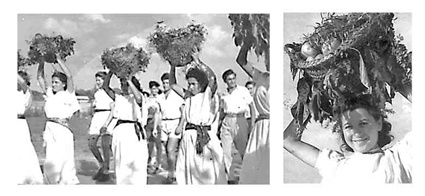
Bicurim feast in the kibbutz highschool


 promised land - renate

